
9 minute read · Zsike Peter
How do you fight cognitive flattening?
“This is ridiculous. How am I supposed to just listen to my thoughts?”
Originally published on Substack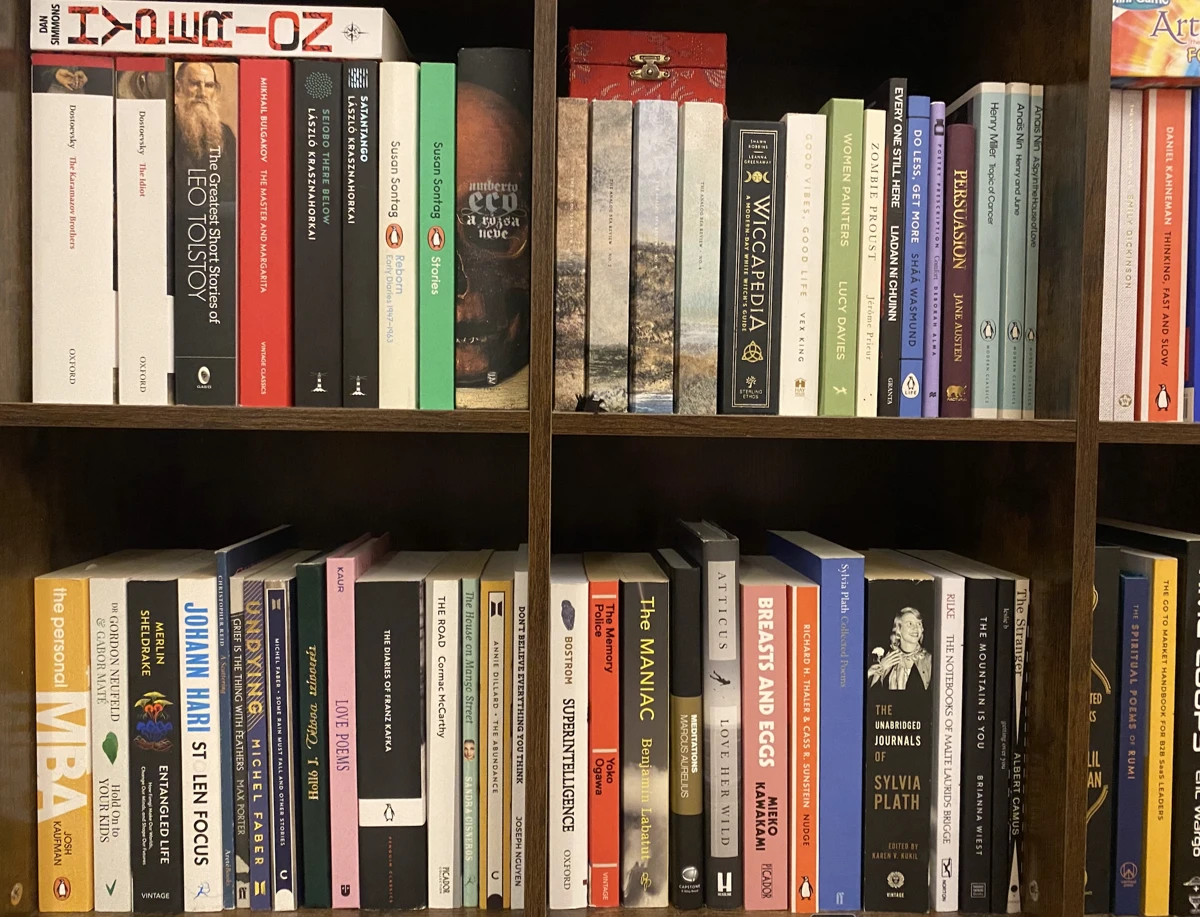
Cognitive flattening is something all of us experience these days, even if we don’t outsource our thinking and writing to AI.
The reason I’m saying this is because of what we get to read.
Unless we deliberately read books, including older books and classics produced long before social media and generative AI, we are increasingly exposed to language that is nowhere near as complex or cognitively challenging as it used to be.
Now, you could argue that this is simply the natural evolution of language. Language has always changed. But I would question whether some of what we’re experiencing today is actually devolution.
We are losing complex words with intricately descriptive meanings, and with them, our ability to express complex thoughts. We are also losing the friction of having to look things up, sit and work with something we don’t understand, or learn deeply and meaningfully.
Why bother when we can just ask AI?
Even with Google, there was friction. You had to go through multiple search results, work out which source actually answered your question, decide whether you trusted it, compare it with something else, click back and forth, double check, and so on. You knew the first result might not contain what you were looking for.
But now you can ask a question and receive a beautifully synthesised answer in seconds. Yes, so convenient.
But what happens to us when the friction disappears?
I think some degree of cognitive flattening becomes almost inevitable unless we consciously put the brakes on. Unless we slow down and put some concerted effort into resisting our own cognitive degradation.
So I’ve been thinking about how I fight back.
Read difficult books…
I deliberately read books that are outside my general understanding of the world. Books that make me work. And I try not to read purely for information.
I want to read for comprehension, for understanding, and, importantly, for conversation.
I talk about what I’m reading with friends, both personal friends and people I’ve met through my work who are open to these sorts of conversations. I don’t mean a book club situation where everyone dutifully arrives having read chapter seven. It’s much more organic than that.
You might mention something you’ve read because it happens to be relevant to a conversation. Someone else has read the same book, or knows the subject, but their understanding of it differs from yours. So you start dissecting why.
Why did you interpret it the way you did? Why do I agree with this part but disagree with the one you agree? Have I misunderstood something? What have you misunderstood?
When you go through this back and forth dancing around a topic, or a book, you’re having to retrieve what you read, articulate your understanding of it, defend your favourite chapter or writer, you might have to reread whole pages or chapters because it’s just not sinking in the first time, and absorb someone else’s interpretation and argument. It becomes an educated debate stretching your views and believes.
And by doing all of this reflective and scrutinising debate, I think we internalise complex subjects in a way we simply don’t when we are exposed to an idea in a short social media post or a TikTok video and scroll on fifteen seconds later.
Let what you read send you somewhere else…
One of the books I’ve recently started reading is How to Kill a Language by Sophia Smith Galer, and it’s been melting my brain in all sorts of ways. What can I do to save my own language? What can I do to protect my thinking?
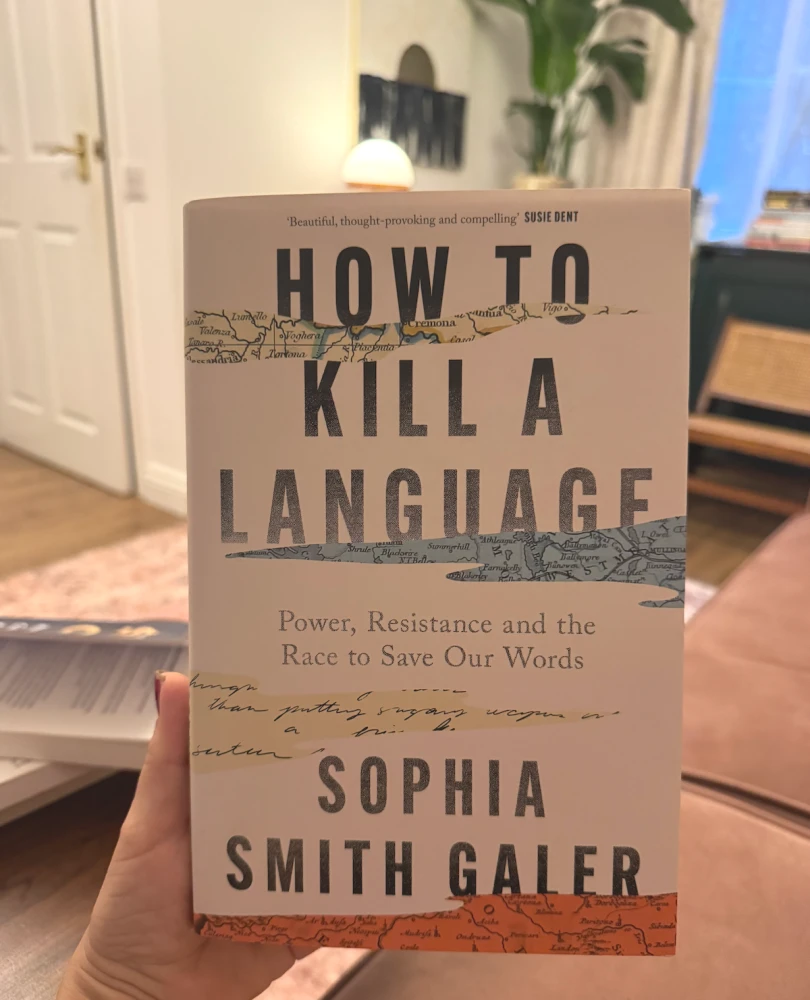
If you are losing words, surely you are also losing some of the ways in which you are able to express yourself, and perhaps even some of the ways in which you’re able to think. A difficult book doesn’t necessarily give me an answer. Sometimes its greatest value is that it irritates my brain enough to produce another question.
Then I write.
Write by hand, from scratch…
For this exercise I write without a laptop, choosing analog over digital. I reach for my pen and a notepad full of messy, unedited, thoughts. Handwriting forces me to slow down because my hand cannot physically keep up with the speed at which thoughts tend to race uncontrollably. The slowness of handwriting whatever comes to mind means I can’t exactly hit the backspace to get rid of a paragraph and immediately rearrange everything with a click of a button on the keyboard. I have to think about what I’m trying to express while I’m writing it.
The whole process is excruciatingly and wonderfully inconvenient, and I think this inconvenience is maybe what we’re missing.
The slow nature of handwriting forces you to marinade in your own brain soup. This slowness demands you to face your messy thoughts, and asks you to decide what deserves to get written down. Does this sentence really reflect what I think it means?
What you’re really doing without any of the tech you’d usually reach for, is forcing your brain to stop sprinting ahead of itself.
Journal, but not about your breakfast…
When I say journalling, I don’t mean “Today I had peanut butter on toast for breakfast…” Unless your toast has caused some sort of existential crisis, in which case, by all means.
I mean reflective writing. Stream-of-consciousness writing.
Sit down and see what comes up, and if your first thought is “This is ridiculous. How am I supposed to just listen to my thoughts?” Write that down, because that itself is a thought worth observing.
This is where metacognition — the act of observing your own thoughts; supposedly the highest form of intelligence — becomes fascinating to me. Metacognition is the ability to put the brakes on the autopilot inside your brain and observe your own thinking. Why am I thinking this? What’s going on inside me? Why did my brain immediately go there? Why has my mind suddenly drawn a blank?
Maybe the blank itself is the thing, and then something wonderfully weird happens. As soon as your mind finds itself being observed by itself, it changes. I’m struggling to find the right language for this because the concept itself feels slightly absurd: your mind observing your mind. As soon as you become conscious of a thought, you can watch yourself editing it, questioning it, and maybe even immediately changing it. Isn’t that an extraordinary thing to realise? That you have some power over your own thoughts?
I don’t think we spend enough time consciously examining ourselves in this way… Our thinking, our wants. There is quite a lot to lose if we stop doing it.
And when I don’t have time to write, I talk to myself…
Some days I simply don’t have time to sit down with a notebook and handwrite my thoughts, so the next best thing I’ve found for allowing that stream-of-consciousness word vomit to happen is a voice-to-text app.
In that sense, yes, technology can be a great crutch. I’m using Wispr Flow to record these thoughts right now (this is not a sponsored article, by the way). I’m just talking as they come, and I’m not editing them beforehand. I self-correct in the process because sometimes I’ll hear myself saying something and realise, no, that’s not actually what I’m trying to say, but essentially, this is unedited stream of consciousness. Then I make time later to sit down and weed through it.
Even the act of speaking things out loud helps me organise what’s going on in my head. It helps me make sense of the autopilot I’ve decided, temporarily, to put the brakes on.
This digital word vomit can become a source of inspiration for all sorts of things. I can refer back to it, organise it, write from it, or decide it was complete bollocks and discard it. That’s useful too.
Speaking teaches you to think, but writing forces you to find out whether you actually did.
I’ve noticed that if you practise speaking your thoughts out loud, even if you’re only talking to yourself into an app, over time you become more adept at verbally expressing what you mean. And that helps with writing too because sometimes you look back at your own word vomit and think “Oh my God. What was I actually trying to say?”
Good. Now you have to find out.
You have to dissect what you recorded and make sense of it on paper, and in doing so, you are practising the act of thinking, because there is no writing without thinking. You cannot decipher your own inner goings-on without thinking about what you’re trying to put into words.
And maybe that’s the point of all of this.
None of us can ignore the global hype around AI making us more productive. We love the idea of having all the shortcuts tech can give us, making us faster, more efficient humans. But maybe, occasionally, we should be deliberately pulling and moving in the opposite direction.
Read something difficult, look up and learn words you don’t know. Make an effort to talk about what you’ve read with someone you know will argue with you. Write slowly. Observe your own thoughts. Say something badly and then wrestle with it until you understand what you were trying to say.
Cognitive friction isn’t an inconvenience we should engineer out of our lives. Doing things the hard way is how we keep our minds from becoming flat in the first place.
If you are interested in reading more from me, here are two of my recently published eBooks (instant download in PDF format):
The Architecture of Attention - a book on how to stop being a well-kept secret. https://vampire-digital.kit.com/products/the-architecture-of-attention
The Tells - a book on what your writing reveals about you, and how to stop it betraying you. https://vampire-digital.kit.com/products/the-tells